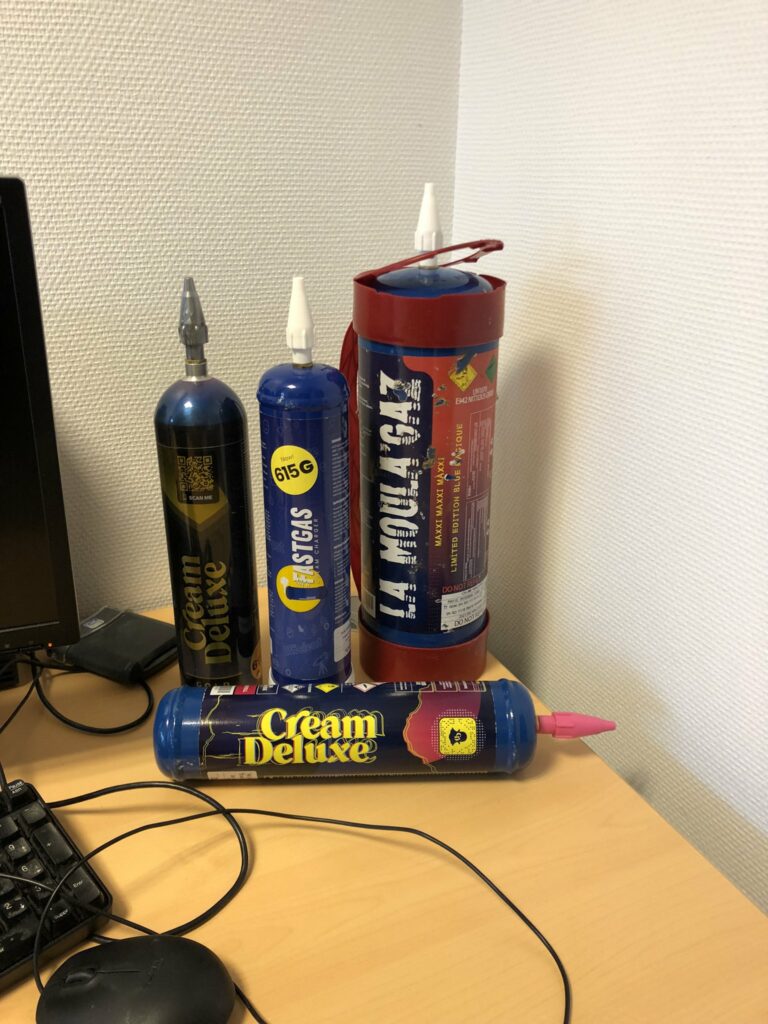


Qu’est ce que le protoxyde d’azote, définition et utilisations ?
Le protoxyde d’azote, aussi appelé gaz hilarant, est un gaz incolore à la fois utilisé pour ses applications médicales et industrielles, mais aussi sujet à un usage détourné. Découvrez sur cette page, ses définition et utilisations
Discovery and first uses
Nitrous oxide was discovered in 1772 by the chemist Joseph Priestley.
Nitrous oxide was initially used in the festive sector, notably at funfairs, but was later discontinued due to serious medical complications.


Use in medicine
Nitrous oxide is then used as an anesthetic in combination with other gases for short surgical procedures. Its ability to induce mild sedation while allowing patients to remain conscious makes it a popular choice for less invasive procedures.
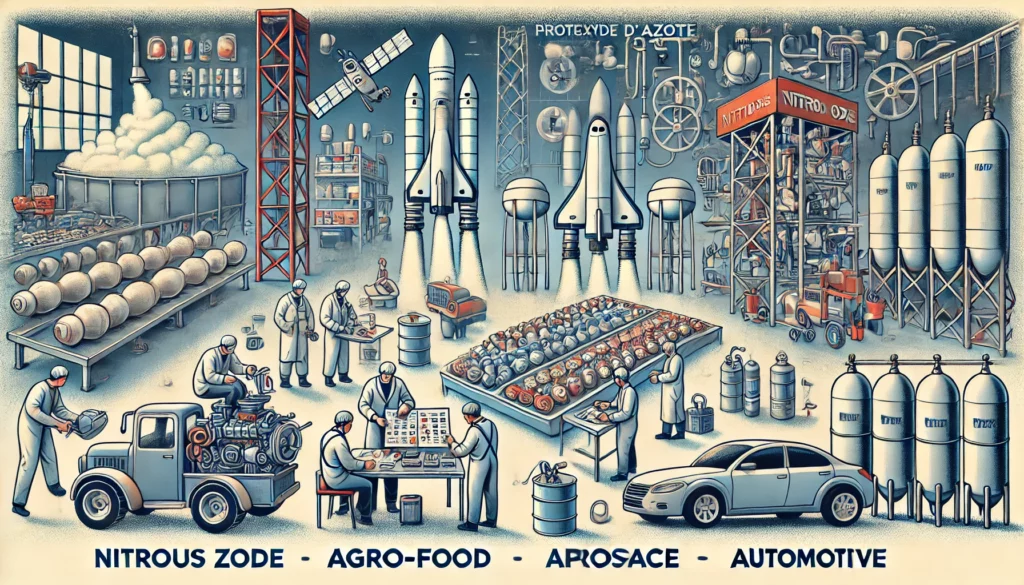
Industrial applications
Outside the medical field, nitrous oxide is used as a propellant in aerosols (whipped cream cartridges) and as an oxidizer in rocket engines. It is also used in the manufacture of semiconductors.

Recreational and diverted use
In recent years, nitrous oxide has been hijacked for its euphoric effect when inhaled. This recreational use can induce uncontrollable laughter, hence its nickname "laughing gas".
The misuse of nitrous oxide began with the use of whipped cream cartridges with balloons.
Recreational nitrous oxide containers then became larger and larger, with the use of carboys containing around 80 to 100 nitrous oxide capsules.
The largest nitrous oxide containers currently available, known as "Tanks", contain the equivalent of 400 to 600 nitrous oxide capsules.
Various containers of nitrous oxide are also available, flavored to encourage consumption.
Current public health problem
L’usage récréatif du protoxyde d’azote a conduit à des préoccupations croissantes en matière de santé publique. L’inhalation abusive peut entrainer des conséquences graves sur la santé.